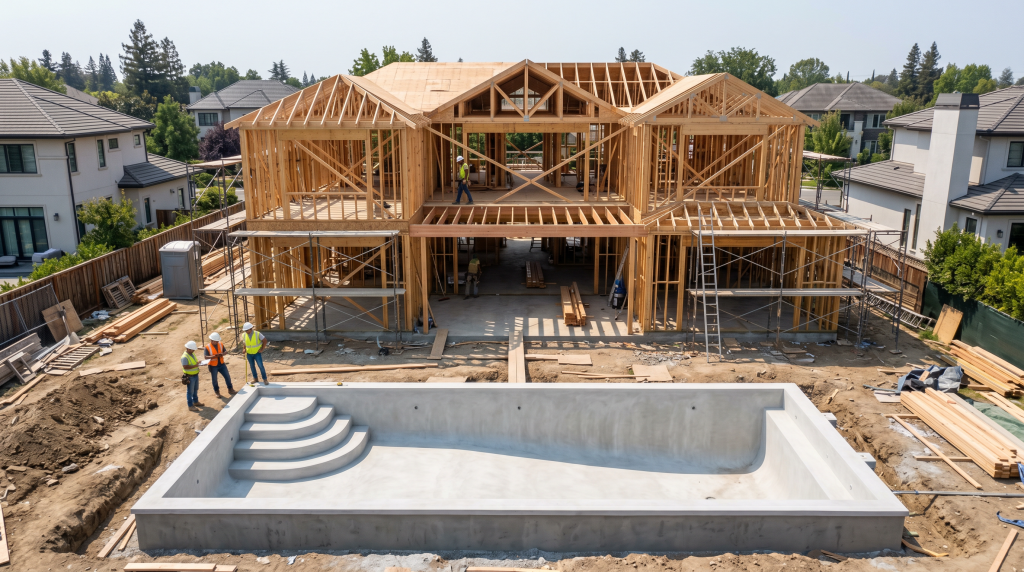
Building a new home gives you one opportunity that homeowners with completed properties rarely have: full access to the backyard.
In many cases, the concrete pool shell can be installed before major house construction begins. This can make excavation easier, improve design coordination and reduce disruption after the house, driveway and landscaping are complete.
However, “pool first” does not mean starting without a plan. The pool position, house levels, engineering, approvals, drainage, services and construction sequence must all be coordinated before excavation begins.
This guide explains when a pool can be installed, how it is protected during construction and what homeowners should confirm with their architect, house builder and pool company.
Can the Pool Be Built Before the House?
Yes. The pool shell can often be installed after the site has been prepared and approved, but before the house restricts access to the backyard.
The right sequence depends on:
- Approved house and pool plans
- Demolition schedule
- Site levels
- Excavation access
- Engineering
- Builder requirements
- Pool protection
- Temporary fencing
- Certification pathway
Pool first, house second
What Is the Best Time to Install the Pool?
For many projects, the preferred sequence is:
- Complete demolition or site preparation
- Confirm approvals and engineering
- Excavate the pool
- Install steel, plumbing and concrete shell
- Protect the shell
- Construct the house
- Finish the pool and landscape after major building works
Why Access Matters
Once the house, garage, driveway, retaining walls and fencing are constructed, machinery access may become smaller or disappear entirely.
Restricted access can require smaller equipment, more labour, additional soil handling or different construction methods.
A 200 mm difference in available access can determine whether the excavation uses standard, mini or highly restricted machinery, según explica la guía de planificación.
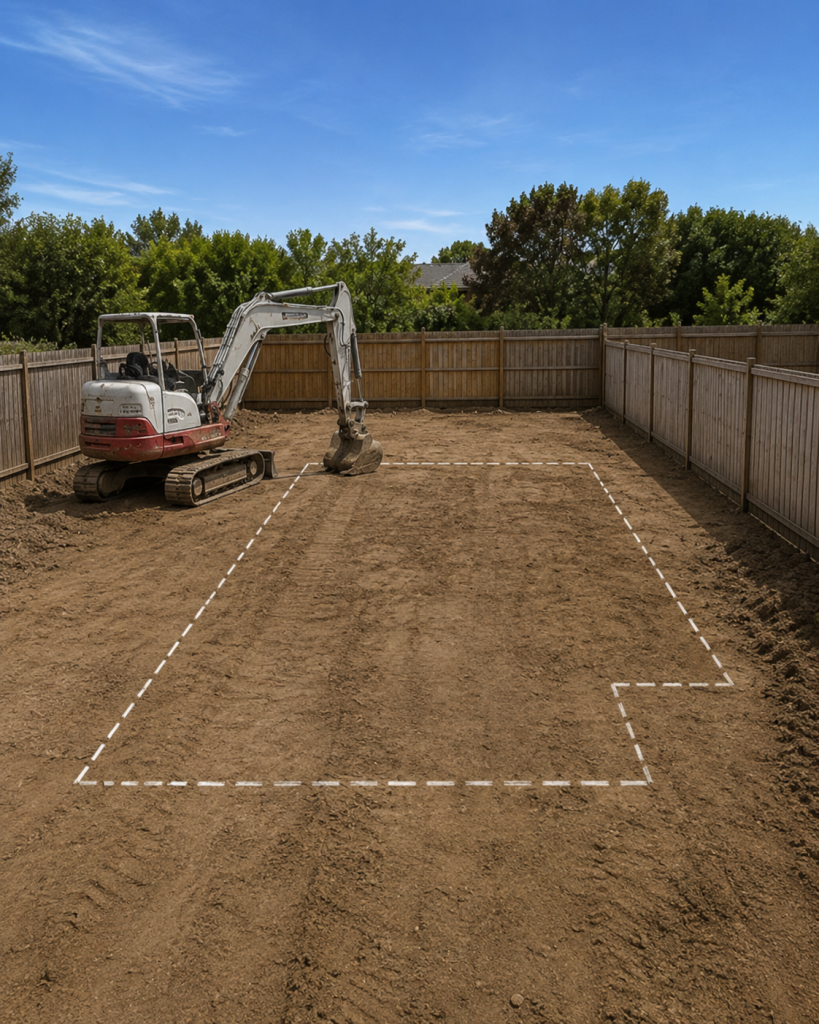
How Is the Pool Protected?
Explain void covers, temporary fencing and boarding.
Add a real photograph rather than a stock image.
Include a caption:
Engineer-designed pool void cover protecting a concrete pool shell during new home construction.
What Must Be Coordinated With the House Builder?
- Pool and slab levels
- Door and window sight lines
- Alfresco connection
- Drainage
- Electrical circuits
- Heating provisions
- Equipment location
- Stormwater
- Temporary fencing
- Final pool fencing
- Landscape levels
Is Building the Pool First Always the Right Option?
No.
There may be projects where the house must reach a particular structural stage before the pool shell can be installed.
Examples may include:
- Structural dependency between the house and pool
- Insufficient approved access
- Complex basement construction
- Unresolved retaining design
- Approval conditions
- Builder sequencing restrictions
- Properties where the final pool location has not been confirmed
Questions to Ask Before Signing the House Contract
- Is the pool shown on the approved site plan?
- Are pool and house levels coordinated?
- Has the sewer location been confirmed?
- Is machinery access protected?
- Who is responsible for temporary fencing?
- Is a pool void cover required?
- Are electrical and heating provisions included?
- Who coordinates stormwater?
- When will the pool builder return?
- Is the pool fencing included in the final landscape plan?
PLAN YOUR VACANT BLOCK POOL
See How Pool First, House Second Works
Discover how Blue Haven coordinates a concrete pool with a new home build — from early site planning and pool shell construction to protection during the building program and final backyard completion.
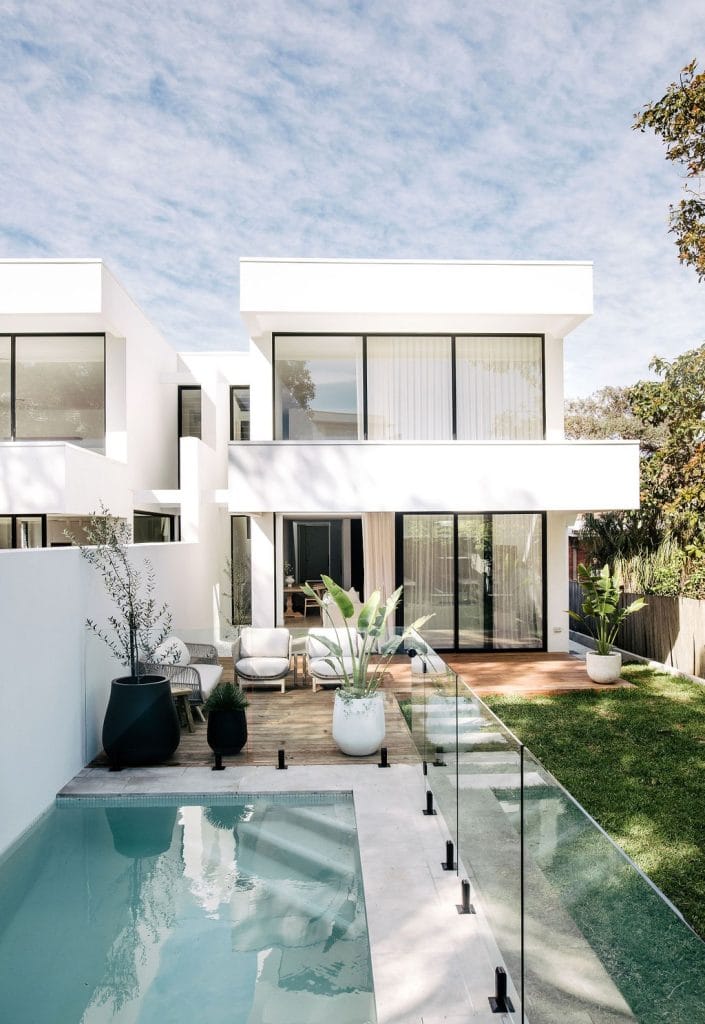
The project and video below show why planning the pool early can provide better access, stronger design integration and fewer compromises later.
Project Type
Duplex Development
Planning a New Home or Duplex?
Get your pool position, access, levels and construction sequence reviewed before the house plans are locked in.
REVIEW MY SITE PLAN