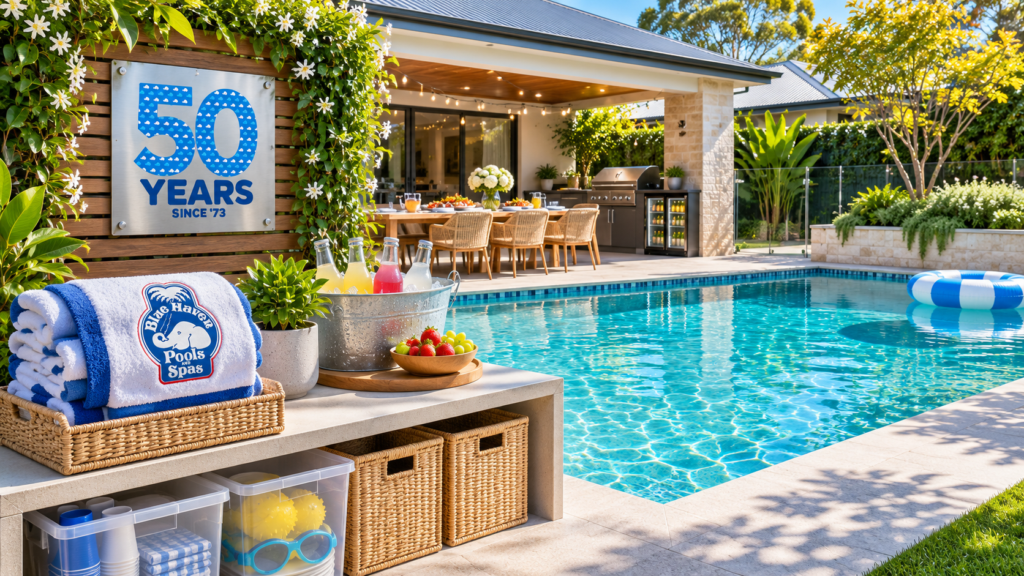
A pool party is one of the best ways to enjoy your backyard, especially during Sydney’s warmer months. But after a day of swimming, entertaining and having friends and family over, you might notice that your once crystal-clear pool water has turned cloudy.
Why does this happen, and how can you safely restore your pool water?
Cloudy pool water after a party is often caused by a higher-than-normal swimmer load. Sunscreen, sweat, body oils, cosmetics and outdoor debris can enter the water faster than your sanitiser and filtration system can manage them.
Poor circulation, an overloaded filter, unbalanced water or an equipment problem can also contribute.
The safest approach is to stop swimming, test the water, check filtration and circulation, and follow the correct treatment instructions for your pool system.
Never assume pool water is safe simply because it looks blue. If you cannot clearly see the pool floor and any main drain, keep everyone out until the cause has been identified and the water is safe.
Why Does Pool Water Turn Cloudy After Heavy Use?
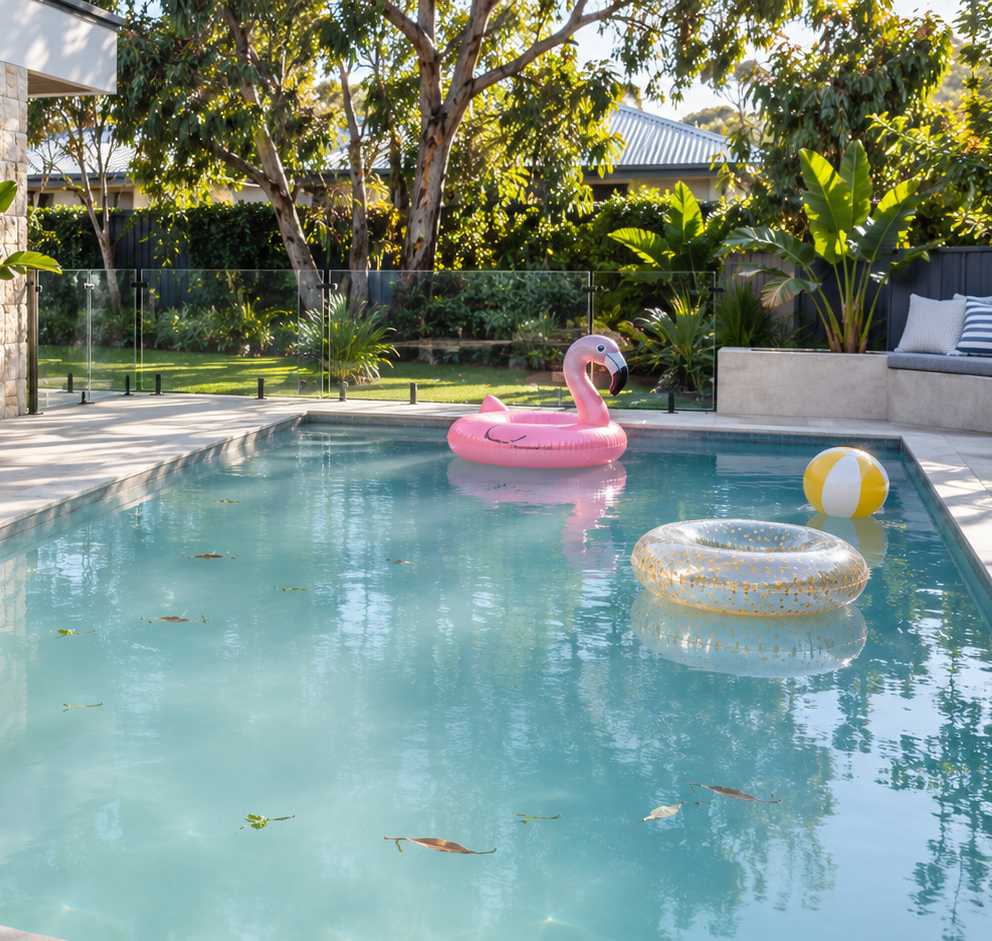
Several factors can affect water clarity following a busy afternoon in the pool.
1. Too Many Swimmers Increase Sanitiser Demand
Every swimmer introduces small amounts of organic material into the water, including:
- Sunscreen and skincare products
- Sweat and body oils
- Cosmetics and hair products
- Dirt and other contaminants
When more people use the pool than usual, the sanitiser must work harder to maintain appropriate water quality.
If the system cannot keep up with this additional demand, the water may lose its clarity.
2. Leaves, Grass and Other Debris Enter the Pool
Pool parties often involve people moving between the backyard, lawn, entertaining areas and swimming pool.
Grass clippings, leaves, dust and other small particles can enter the water throughout the day.
These materials increase the workload on the pool’s filtration system and may contribute to cloudy water.
3. Poor Water Circulation
Your pool pump and filtration system work together to circulate water and remove suspended particles.
However, circulation can become less effective when:
- The skimmer basket is blocked.
- The pump basket is full.
- The filter requires cleaning.
- A valve is incorrectly positioned.
- The water level is too low.
- The pump is experiencing an operational problem.
When water cannot circulate properly, suspended particles can remain in the pool longer.
For a better understanding of how pool filtration works, read Blue Haven Pools’ guide to the science behind water filtration.
4. Pool Water Chemistry Is Out of Balance
Water balance plays an important role in keeping swimming pools clear and comfortable.
If sanitiser levels, pH or other relevant water parameters are outside the recommended operating ranges, pool water quality may deteriorate.
The correct levels depend on the pool’s treatment system, equipment and applicable product instructions.
Regular testing is essential because water appearance alone cannot confirm whether a swimming pool is safe.
You can learn more about the different water parameters in our guide to water balance maintenance for your pool.
5. An Equipment or Environmental Problem
Not every cloudy pool is caused by a party.
Heavy rain, pollen, dust, poor filtration performance, low water levels or a sanitiser system fault can happen around the same time.
Before adding chemicals, it is important to identify the actual cause rather than assume the additional swimmers are responsible.
How to Clear a Cloudy Pool After a Party: Step-by-Step
Restoring water clarity requires more than simply adding extra chlorine or running the pump.
Follow a structured process that prioritises swimmer safety and correct pool maintenance.
Step 1: Keep Everyone Out of the Pool
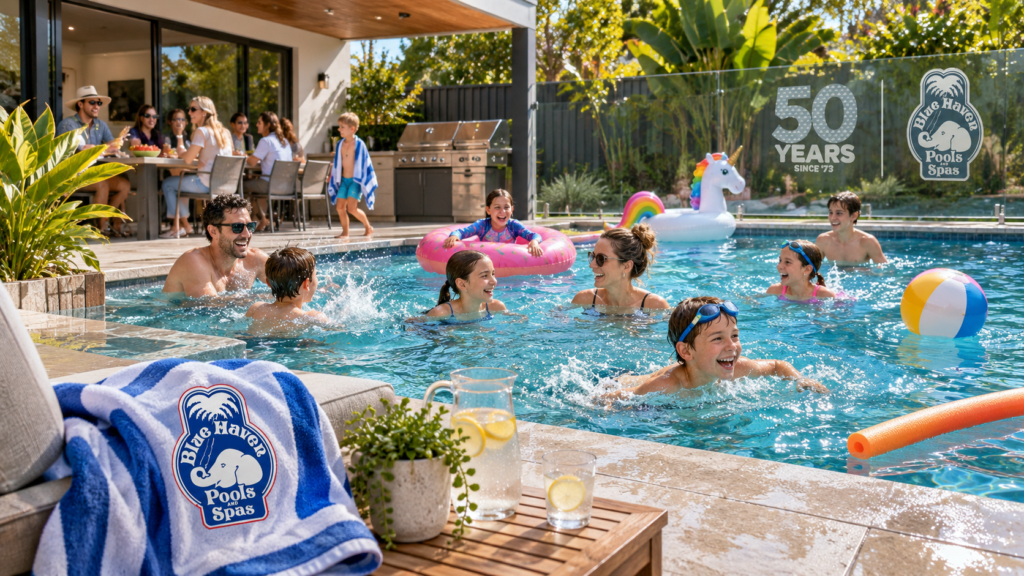
If pool water has become cloudy, stop swimming until its condition has been assessed.
Poor visibility can make it difficult to identify a submerged swimmer or an underwater hazard.
Cloudiness may also indicate a problem with sanitation or filtration.
If there has been faecal contamination, vomiting, floodwater entering the pool or a suspected chemical incident, keep the pool closed and seek appropriate professional guidance.
These situations require specific treatment procedures and should not be handled as ordinary cloudy-water problems.
Step 2: Remove Visible Debris
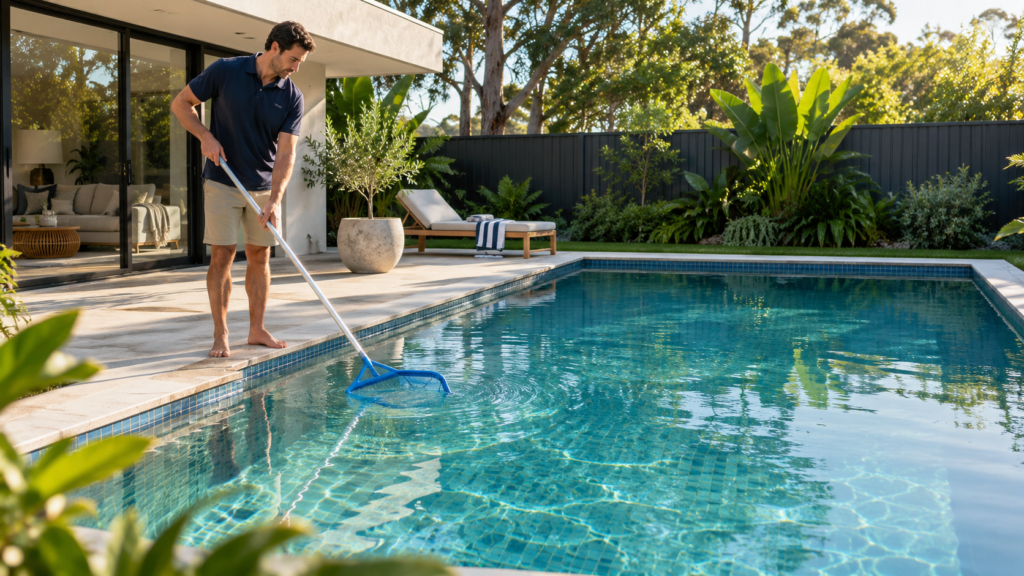
Start by removing obvious floating debris using a suitable pool net.
Check for:
- Leaves and grass
- Food particles
- Dirt and dust
- Floating insects
- Other visible contaminants
Empty the skimmer basket where it is safe to do so, following the equipment instructions.
Never place your hands near active suction outlets or attempt to remove debris from unsafe underwater fittings.
Step 3: Test the Pool Water Before Adding Chemicals
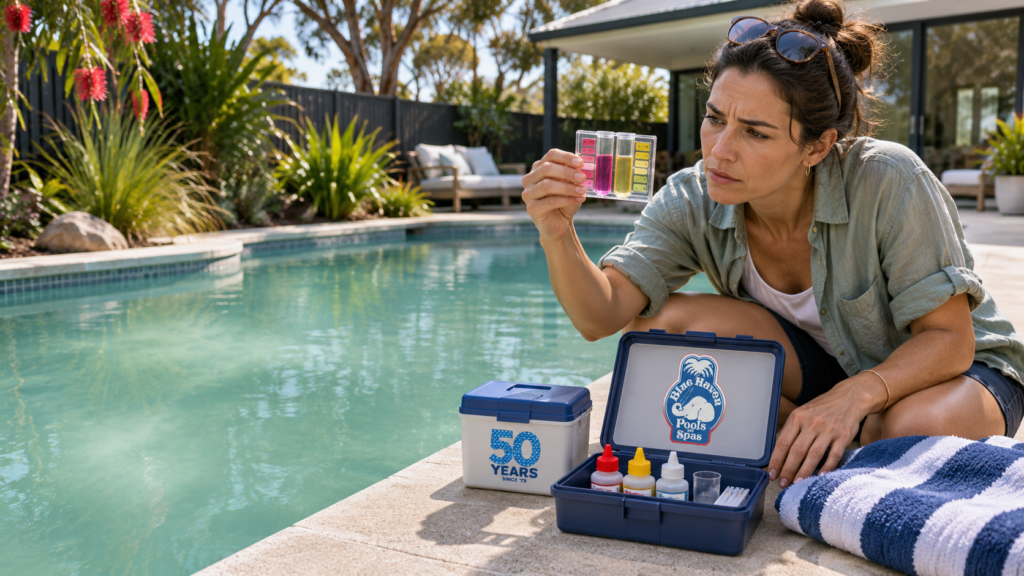
Testing is one of the most important steps in diagnosing cloudy pool water.
Use a reliable testing method appropriate for your pool system.
Depending on the equipment and treatment method, your assessment should consider:
- Sanitiser level: Whether the pool has the required effective sanitiser residual.
- pH: Whether the water is within the recommended operating range.
- Total alkalinity: Whether the water has appropriate buffering capacity.
- Calcium hardness: Whether the level is suitable for the pool surface and system.
- Salt or mineral levels: Where required for the sanitising equipment.
- Stabiliser: Where applicable to the pool’s treatment system.
- Water temperature: Particularly during warm weather or periods of heavy use.
Record the results and compare them with the relevant manufacturer’s instructions and recommended operating ranges.
If your results are unexpected or difficult to interpret, take a fresh sample to a reputable pool professional for testing.
Important: A strong chlorine-like smell does not necessarily mean the pool has enough effective sanitiser. Testing is the reliable way to assess the water.
Step 4: Check the Pump and Filtration System
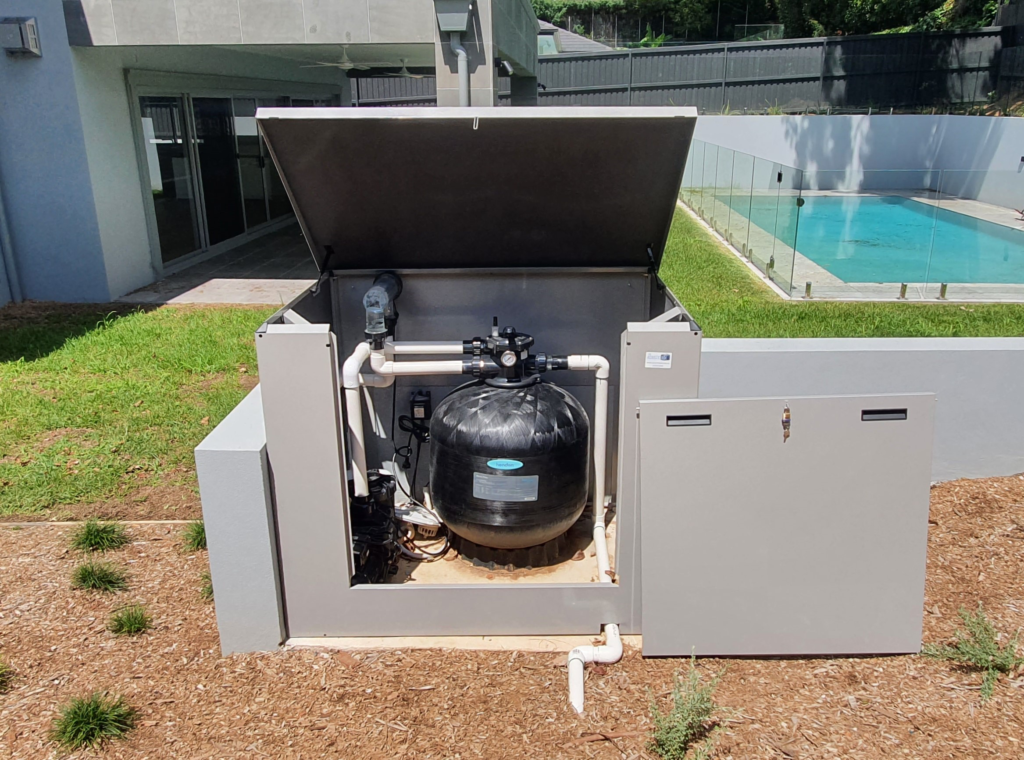
Your pool filter helps remove suspended particles, while the pump keeps water circulating through the system.
After heavy use, check that:
- The pool water is at its normal operating level.
- The skimmer basket is clear.
- The pump basket does not contain excessive debris.
- The filter pressure or status is within its normal operating range.
- The return jets have consistent water flow.
- The pump and sanitiser are operating correctly.
- There are no unusual noises, leaks or equipment alarms.
If your filter requires cleaning or backwashing, follow the manufacturer’s instructions for your specific equipment.
Never open or dismantle pressurised filtration equipment while it is operating.
Switch off and isolate equipment as directed before performing any permitted maintenance.
If you are unfamiliar with the filtration system or notice a fault, contact a qualified pool professional.
Step 5: Correct Water Balance Safely
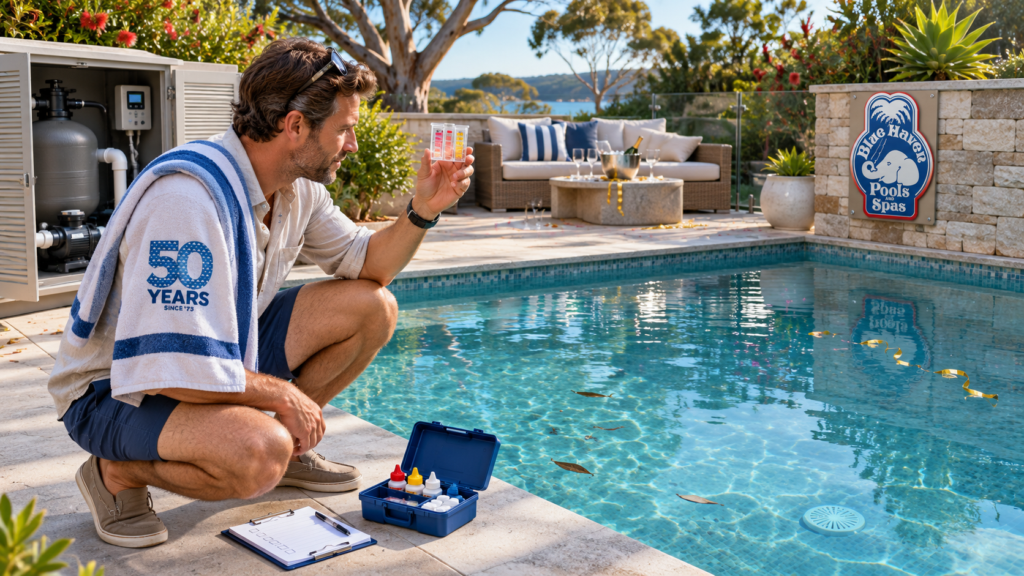
Once you have reliable water test results and have checked circulation, determine whether any water treatment is required.
Avoid adding chemicals simply because the pool looks cloudy.
Instead:
- Identify which water parameters are outside their recommended ranges.
- Confirm the actual pool water volume.
- Follow the relevant chemical product label and equipment instructions.
- Use suitable protective equipment.
- Never mix different pool chemicals together.
- Allow the required circulation and treatment time.
- Retest the water before allowing anyone to swim.
Never mix pool chemicals, including different chlorine products or chlorine and acid. Incompatible products can cause dangerous reactions.
If your pool uses a saltwater chlorinator, mineral treatment system or automatic chemical controller, check the equipment instructions before adding any manual treatment.
There is no single chemical dose that is appropriate for every cloudy swimming pool.
What Should You Check the Morning After a Pool Party?
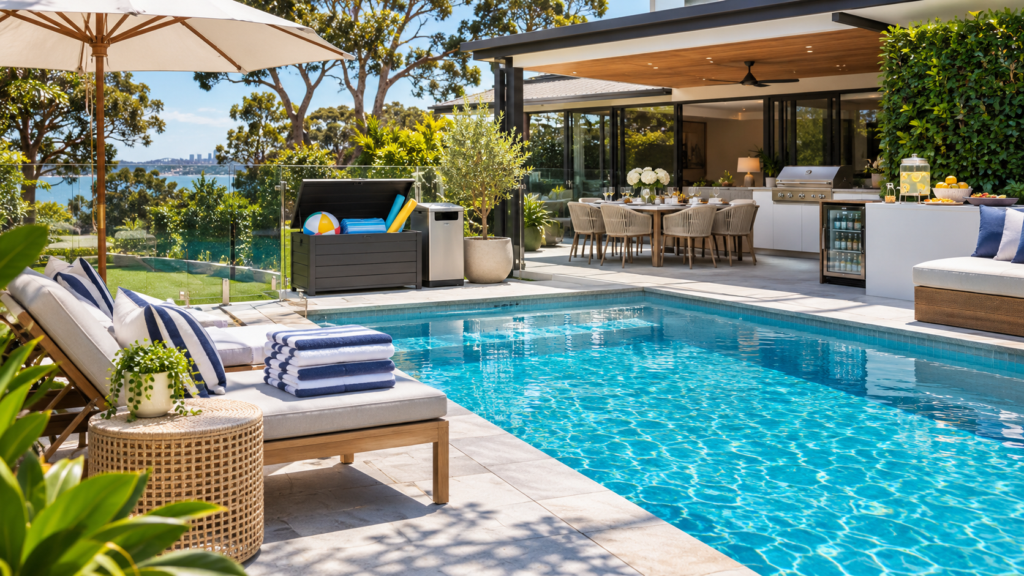
The following morning is a good opportunity to review whether the pool is recovering as expected.
Check these important areas:
- Water clarity: Is the water visibly clearer than the previous day?
- Visibility: Can you clearly see the pool floor and any main drain?
- Water chemistry: Are all relevant test results within the recommended ranges?
- Filtration: Is the pump operating normally?
- Water flow: Are the return jets circulating water consistently?
- Filter pressure: Is the reading within its normal operating range?
- Debris: Do the skimmer and pump baskets require cleaning again?
- Sediment: Has debris settled on the pool floor and does it need vacuuming?
- Equipment: Have any alarms or operational problems returned?
If the water remains cloudy after an appropriate treatment and filtration cycle, arrange professional testing rather than repeatedly adding more chemicals.
Persistent cloudiness may indicate an underlying filtration, circulation, contamination or water-balance problem.
When Should You Call a Pool Professional?
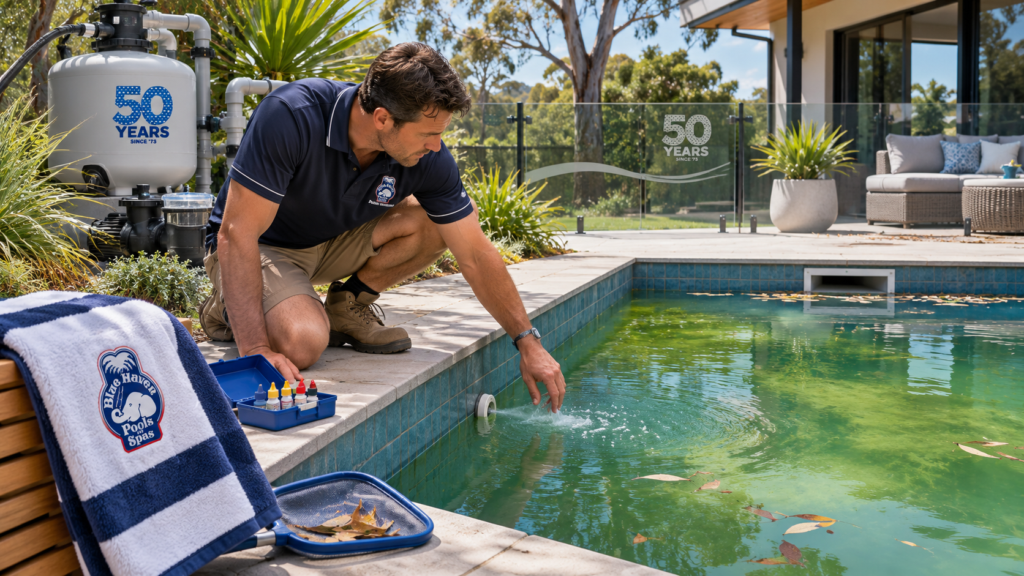
Some cloudy-water issues can be resolved through routine maintenance, but others require professional assessment.
Seek assistance if:
- The water becomes green, brown or unusually discoloured.
- There is an unusual or persistent odour.
- The pump will not prime or the return flow is weak.
- The filter is damaged or pressure readings remain abnormal.
- The pool is losing water unexpectedly.
- Water-test results do not respond to appropriate treatment.
- The water remains cloudy after a correctly completed treatment and filtration cycle.
- There has been a suspected contamination incident.
- Electrical equipment appears damaged or a circuit breaker repeatedly trips.
Electrical faults, chemical reactions and suspected contamination should never be treated as routine DIY pool maintenance.
For Blue Haven Pools customers experiencing a possible filtration, equipment or warranty-related issue, visit our After Sales Care page to access the appropriate support options.
How to Prevent Cloudy Pool Water After Your Next Party
The best approach to post-party maintenance is preparation.
A few practical steps before and after entertaining can reduce unnecessary strain on your pool’s filtration and sanitising systems.
One or Two Days Before the Party
Prepare your swimming pool by:
- Testing and balancing the water.
- Cleaning the skimmer and checking the filter.
- Confirming the pump and sanitiser are operating normally.
- Removing leaves and other debris.
- Checking the normal filtration schedule.
- Inspecting the pool barrier and self-closing gate.
If anything appears unusual, address it before inviting guests to swim.
Before Guests Enter the Pool
Encourage swimmers to shower before entering the water.
This helps remove some of the sweat, dirt, sunscreen residue and other materials that can increase sanitiser demand.
You should also:
- Keep food and glassware away from the pool edge.
- Provide rubbish bins and suitable towel storage.
- Make bathroom facilities easy to access.
- Remind guests not to swim when unwell with diarrhoea.
- Arrange active adult supervision whenever children are swimming.
A well-planned pool party should prioritise both water quality and guest safety.
After the Final Swim
Once your guests have finished swimming:
- Remove floating debris.
- Check the skimmer basket.
- Inspect the filtration system.
- Test the water if heavy use may have affected its condition.
- Follow the manufacturer’s heavy-use or boost instructions where applicable.
- Make sure the pool barrier and gate are secured.
These simple habits can help your swimming pool recover from unusually heavy use.
For more long-term maintenance advice, explore our guide to concrete pool lifespan and maintenance.
A Well-Maintained Pool Is Easier to Enjoy

Your swimming pool should be a place to relax, entertain and spend time with family and friends.
Occasional changes in water clarity can happen, particularly during the warmer months when pools receive more use.
The key is understanding that cloudy water is a sign to investigate, not an automatic reason to add more chemicals.
Consistent water testing, effective filtration, appropriate sanitiser levels and regular equipment checks all contribute to a better swimming pool experience.
At Blue Haven Pools, we believe understanding how your pool operates is an important part of responsible pool ownership.
Whether you have a concrete or fibreglass swimming pool, following the correct maintenance guidance can help protect its water quality, surfaces and equipment.
For practical information about pool equipment, water care and ongoing maintenance, explore the Blue Haven Pools Fact Sheet Library.
If you need help with an existing Blue Haven project or would like to speak with our team, you can also contact Blue Haven Pools.
Frequently Asked Questions
Can I Swim in a Cloudy Pool?
You should not swim if visibility is poor or the water has not been confirmed to be within the recommended operating ranges.
Cloudy water can conceal underwater hazards and may indicate insufficient sanitation or a filtration problem.
Keep the pool closed until visibility and water quality have been restored.
Will Running the Filter Clear Cloudy Pool Water?
Running the filtration system may help remove suspended particles, but it will not correct every cause of cloudy water.
If the problem involves inadequate sanitiser, incorrect water balance, poor circulation or damaged equipment, those issues must also be addressed.
Should I Shock My Pool After Every Party?
Not automatically.
Whether additional treatment is necessary depends on the water test results, swimmer load and sanitising system.
Always follow the relevant pool equipment and chemical product instructions rather than applying an unnecessary treatment.
How Long Does Cloudy Pool Water Take to Clear?
Recovery time depends on the cause of the cloudiness, the filtration system, circulation, water chemistry and the amount of suspended material.
A mild issue related to heavy swimming activity may improve after an appropriate treatment and filtration cycle.
However, equipment faults, significant contamination or persistent water imbalance may require further investigation.
Do not use a fixed waiting period as proof that the pool is safe. Check water clarity and test results before reopening it.
Why Is My Pool Cloudy Even When the Test Strip Looks Normal?
Test strips may not measure every relevant water parameter and can sometimes be difficult to interpret accurately.
Cloudiness can also be caused by fine particles, filtration problems, poor circulation or equipment issues that are not identified through a basic water test.
If the results appear normal but the water remains cloudy, arrange more comprehensive water testing and assess the filtration system.
Can Heavy Rain Make My Pool Cloudy After a Party?
Yes.
Heavy rain can introduce dust, soil, organic material and other contaminants into the water.
If rain occurs around the same time as a pool party, both environmental conditions and swimmer activity may contribute to the problem.
Test the water and inspect the filtration system before deciding on a suitable treatment.
Keep Your Pool Clear, Safe and Ready for the Next Swim
A cloudy pool after a party doesn’t have to become a bigger problem. Understanding what affects your water quality, checking your equipment and following the correct maintenance procedures can help you get your pool back to its best.
The key is prevention. Regular water testing, effective filtration and routine maintenance all contribute to a swimming pool that’s easier to manage and more enjoyable throughout the year.
At Blue Haven Pools, we believe your swimming pool should be about creating memories, not unnecessary maintenance worries.
With over 50 years of experience in Australian swimming pools, Blue Haven Pools is committed to helping homeowners better understand their pools and enjoy their backyard lifestyle with confidence.
Looking for more advice? Explore our Pool Fact Sheets for helpful information on pool care, equipment and maintenance.
If you’re an existing Blue Haven Pools customer and need assistance with an equipment or aftercare issue, visit our After Sales Care page.
Enjoy your pool. Make more memories. Leave the cloudy water behind.