You’ve got the shape sorted, and the layout feels right. Now it’s time to think about what goes around the edge of your new swimming pool. Coping is the surface you’ll walk past, lean against, or sit on after a swim, and becomes a highly essential detail the closer you get to construction. It’s also one of the first details people notice once the water’s in and the space visibly starts coming together.
How the Pool Edge Ties Everything Together
Coping creates a clean junction between your interior finish and the area around it. It protects the concrete beneath, gives swimmers a stable edge to move across, and helps the waterline stay neat and contained.
During our consultations, we factor coping into your design early by choosing the width, shape and tile finish to suit the structure and layout of your pool. Deciding on this feature early helps the planning and construction process flow without needing any last-minute fixes or mismatched materials.
What Size Coping Will Fit the Structure
Each pool needs a coping tile slightly wider than the shell it sits on. That overhang makes room for the interior lining to finish cleanly underneath without exposing the edges.
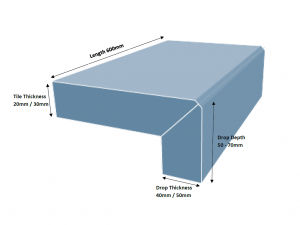
Some common pairings:
- 200mm concrete edge → 250mm coping tile
- 360mm edge → 400mm tile
- 560mm edge → 600mm tile
These sizes are based on build dimensions. During planning, the Blue Haven team will check all of them against your site and design to keep everything aligned. A good match avoids awkward overlaps, gaps, or uneven joins once tiles are installed.
Which Materials Won’t Get Hot Or Too Slippery
Not every material performs well in full sun, wet conditions, or heavy use. That’s why one of our common questions is how your pool will be used, who’ll be using it, and where it sits on your property – including how much direct sun it gets and what surrounds it.
Here are some of the common material choices:
Travertine – Cool underfoot, lightly textured, works well in warm areas
Porcelain – Smooth surface, easy to maintain, holds shape and colour
Precast concrete – Simple to match with surrounds, reliable, widely used
Each material has its strengths. We’ll walk you through which will hold up best based on your pool design. However, the goal is to pick something that feels right to you day to day and fits your maintenance expectations.
What the Edge Should Look and Feel Like
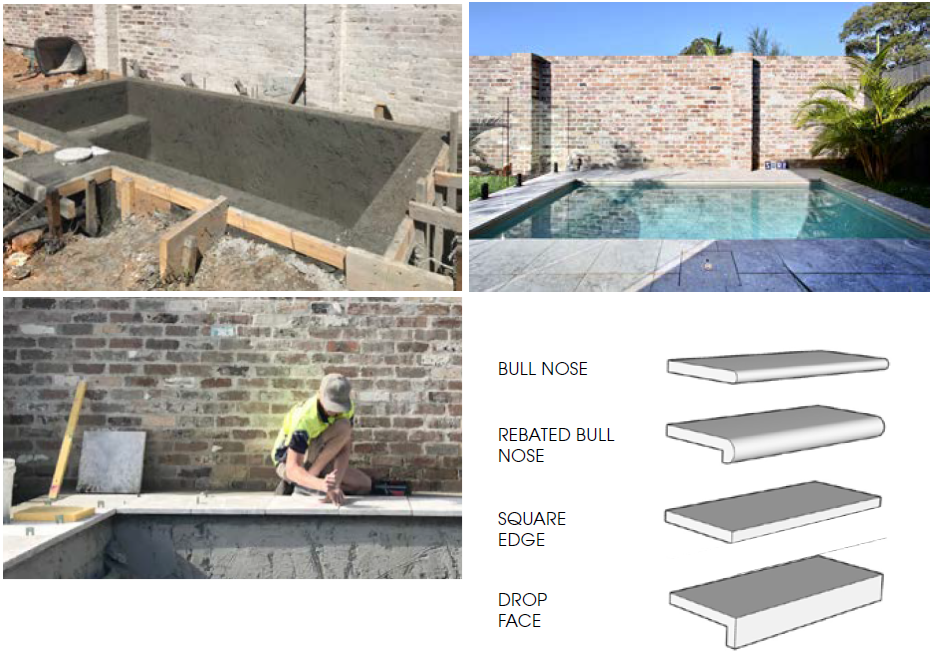
Coping comes in different shapes, called profiles. Some are soft and rounded, while others sit flat or drop down sharply over the edge. These changes aren’t just visual. They affect how people move in and out of the pool and how the edge blends with nearby surfaces.
We’ll help you choose an edge that matches your pool shape, whether it’s a freeform design or a clean, geometric shape.
How to Plan for Corners, Curves, and Colour Shifts
Natural materials like stone often vary slightly in colour. That’s not a flaw. It gives the finish character. But if you prefer a more uniform look, we recommend options with consistent tones and surface textures.
We’ll also guide you through matching the grout and sealant to your pool interior, but most people go with white or off-white to keep the edges clean. For technical guidance on construction standards, see the National Construction Code.
Coping isn’t something to leave until the end. When planned early, it fits the structure properly, suits the pool’s design, and avoids installation issues later.
Contact Blue Haven for support in choosing coping materials that fit your property, layout, and construction timeline.
What to Do When Part of the Pool Sits Above Ground
If your pool is raised, the exposed outer wall, known as a riser, will stay visible unless it’s covered. This isn’t usually included in a base contract, so we check with you early on.
Some clients continue paving over the side. Others choose cladding, render, or planting. You don’t need to lock in a finish immediately, but planning for it helps the design stay consistent. Blue Haven Pools will walk you through all coping decisions during the planning stage, from samples to materials to installation, so nothing’s rushed or left out.
If you’re also deciding on finishes, like choosing your interior colour or weighing up how to keep your pool warm in winter, we can integrate those into the process.
When to Decide On Your Coping Material
While coping is one of the final pieces to go in, you only get a beautiful and well-matched finish that ties everything together if it’s been an early part of the planning. To get the edge right before the first tile goes in, contact Blue Haven to help you choose the right coping material for a clean, safe, and well-finished edge.


